

I just read the recent issue of Inc. Magazine where some of the country's most successful entrepreneurs share their stories. All agree that an entrepreneur without a story is an entrepreneur without inspiration. 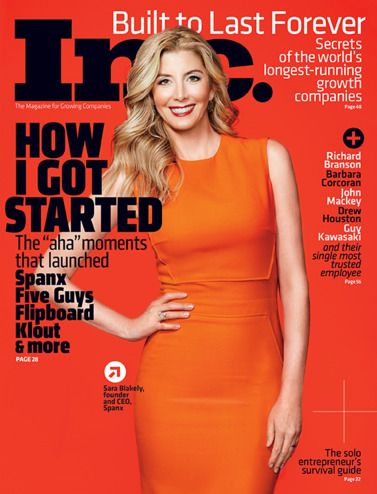 For example, Sara Blakely's story of how Spanx was born is simple - she bought a pair of white pants and found that nothing she put on under them worked until she cut off the feet of a pair of stockings. Voila! No more bulges, panty lines or unsightly winkles - Spanx was born. So, what's your story?
In my experience as a business coach, I have heard a lot of entrepreneurial stories and I can tell you withouot bias the stories I hear from women are always the most inspirational. Why do I say this? It's not because male entrepreneurs don't have great stories -- many of them do -- and you'll read some great ones in this February 2014 issue of INC. Magazine. But, women tend to come to entrepreneurship from a very different place. They are less likely to start a business because they see piles of money in their dreams.  What they do see is a solution to a problem - -aka Spanx -- or a way out from the corporate job they are currently tied to. Women entrepreneurs tend to launch businesses for different reasons then men and this makes their stories all that more important.
Here are just some of the stories I know well. "I started my business because I knew I had a knack for decorating. People always raved about my house decor and asked me for suggestions. I would do my best to connect them with vendors who could help them and eventually found my way in the the interior design business." Or, "I worked in marketing for more than twenty years doing my best to bring the most creative ideas to every agency I ever work with. Time after time, my clients (the agency's clients) would ask me to work on a project on the side. I didn't have time for this work but would do my best to accommodate my (our) clients. Before I knew it I quit my job at the agency and took on several of the clients so I could devote all my time to their needs. It was the best thing I ever did and it has been a win-win for all". Or, "Two of my sisters and I were all diagnosed with different cancers within a few months. As the three of us went through the terrible indignity of the disease we thought there must be a better way. We developed a garment that provided dignity for patients as they received their treatments, either as outpatients or inpatients. Whether or not an individual has cancer does not mean they should yield their dignity to others."
These are just three stories from women entrepreneurs that I have worked with over the years and I could tell you hundreds more. Women tend to launch businesses based on passion from their experiences and the desire to do it their own way. The question is are these women entrepreneurs sharing their stories with others?
The INC. Magazine article states that an entrepreneurs story gains traction not only with customers but with the venture community. Do women entrepreneurs feel vulnerable in telling their stories? Is this the reason that women entrepreneurs currently receive only about 3% of venture capital?
I asked these questions to the women entrepreneurs who are seeking capital? I asked them of the venture capital community who look to invest in entrepreneurs with passion and drive?
Most important, I ask this of you the woman entrepreneur reading this blog. Do you tell your story? Do you have a story to tell? Have you thought about why you are in business in the first place?
Every speaker will tell you that storytelling is the way to gain an audience. Therefore, as an entrepreneur who is looking to attract an audience knowing and telling your story may be just the answer to your success.
I spent 10 years of my life publishing a newspaper that told the stories of women in business and it never got old. I loved every story and was inspired by them all. So, never underestimate the story that is yours to tell.
